10 Days
West Coast
River Trip
UNESCO Site
Why this expedition?
"Just like its alter ego Manambolo, majestic Tsiribihina takes you along to the heart of the vastnesses of the Malagasy West. Sometimes it takes its time and traces its meanders in a lunar landscape, sometimes in a grassy savanna where giant acacias, kapok and jujube trees are detached, sometimes in the luxuriance of a vegetation sheltering fauna swarming with life. A true 'bath of nature' awaits those who choose the experiment of this tour leaving the beaten tracks. Our dugout will not disturb the colonies of brushes, of teals or of ashen heron; the lemurs will not give up so little their capers, and the rest will be made by the art of cooking of your cook-guide for the halts on a sand bank... Exit the stress; you are living unforgettable moments on the road of Tsingy, these masterpieces of architecture which will disappear one day because of this same erosion that has drawn them so well. For the time being, don't worry, that will not arrive before a few other million years."
Itinerary Details
Antananarivo
Arrival at Ivato International Airport and transfer to your hotel. Fully experience your first glimpse of the "City of a Thousand," one of the world's most picturesque capitals, where rice paddies stretch as far as the eye can see. A veritable pyramidal city whose base seems to extend to infinity, Antananarivo is built on three levels, crowned at its summit by the iconic Queen's Palace, currently undergoing restoration. Visit Ambohimanga, the "Blue Hill," and the old town, offering breathtaking panoramic views.
Antananarivo - Antsirabe
We choose to depart early to discover the Imerina countryside as it awakens, with its rolling landscapes, hamlets with mud walls, and ubiquitous rice paddies. At kilometer 170 of the RN7, also known as the Southern Route, Antsirabe, Madagascar's premier thermal spa, enjoys a particularly invigorating climate. In the afternoon, we'll treat ourselves to a rickshaw ride between visits to lapidary and artisan workshops. Overnight stay at a hotel, according to the client's choice.
Antsirabe - Miandrivazo
We won't leave the City of Water without a short detour to Lake Tritriva, Madagascar's most famous volcanic lake. We'll then head west, the fertile lands of Vakinankaratra gradually giving way to the arid landscape of Bongolava. Miandrivazo, on the banks of the Mahajilo River, a tributary of the Tsiribihina, will be our port of embarkation. This region is renowned for having some of the highest temperatures in Madagascar! Relaxation at the Coin d'Or or Rasalimo hotel.
Tsiribihina River Navigation
Embarkation at 8h00 after breakfast, then a pirogue trip on a flat-bottomed boat from which the landscapes of western Madagascar, with their austere beauty, will unfold before our eyes. We'll make as many stops as you wish to stretch your legs in pristine nature and observe endemic bird species such as sibilant ducks, herons, and chameleons. Lunch break in the middle of the day: the guide-cook will prepare a meat-based meal (cattle, fish, chicken and vegetables, of course), exclusively made with fresh products! We'll resume navigation until evening, setting up camp on a sandbank. Guaranteed meditation to the sound of nocturnal insect songs and under a magnificent starry sky…
The Gorges of Tsiribihina
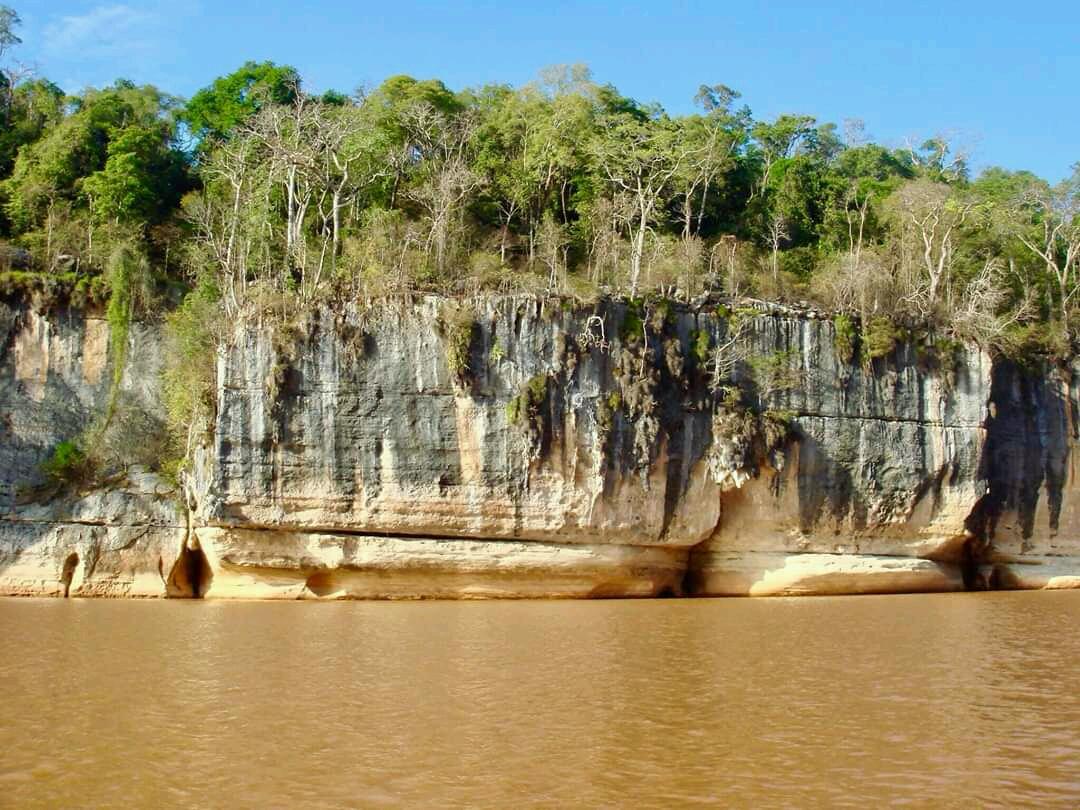
The passage through the gorges of Tsiribihina, through the imposing Bemaraha massif, is one of the highlights of the descent. Fantastical landscapes, a dry deciduous forest, a diverse fauna where you will notably recognize the lemurs to be seen, such as the glassy or fulvous lemur propagules, the very rare Madagascar pygmy owl or "Ankoay", or even large chattering parrots. Bathe in a natural pool fed by crystal clear water from a beautiful waterfall. With a bit of luck, you'll be able to observe lemurs drinking there.
Antseraraka
We take breakfast on a sandbank, as usual, then we set off with the tobacco fields in the background. It is said that these are Greek migrants who launched this intensive cultivation at the end of the 19th century. Under the impassive gaze of black-headed herons, our boats will pass in front of the rocky blocks where banks of roussettes are suspended. Final campsite at the edge of Tsiribihina.
Antseraraka - Bekopaka
All paths lead to Bekopaka, the "gate" of the Tsingy. We'll start ours in a zebu-drawn cart, then take a 4x4 that will take us to our destination passing through Belo, on the Tsiribihina river. We'll camp in the shade of mangroves, by the Manambolo river.
Tsingy of Bemaraha
Declared a World Heritage Site by UNESCO in 1990, the Tsingy of Bemaraha became a national park in August 1997 in order to develop its ecotourism potential. These tsingy form a very dense system of faults, fissures and limestone blocks sculpted into sharp needles. Their complex hydrology, with underground cavities that served as shelter for the "vazimba", the first inhabitants of the island, is remarkable. The fauna is very rich, with 13 species of lemurs, mammals such as the fossa, terrestrial and aquatic birds, amphibians and reptiles. As for the flora, 85% of species are endemic. A wide choice of circuits, at different difficulty levels, allows for a free visit to this exceptional site. At Bemaraha, discovery takes on all its meaning. Let's go discover it together!
The Alley of Baobabs
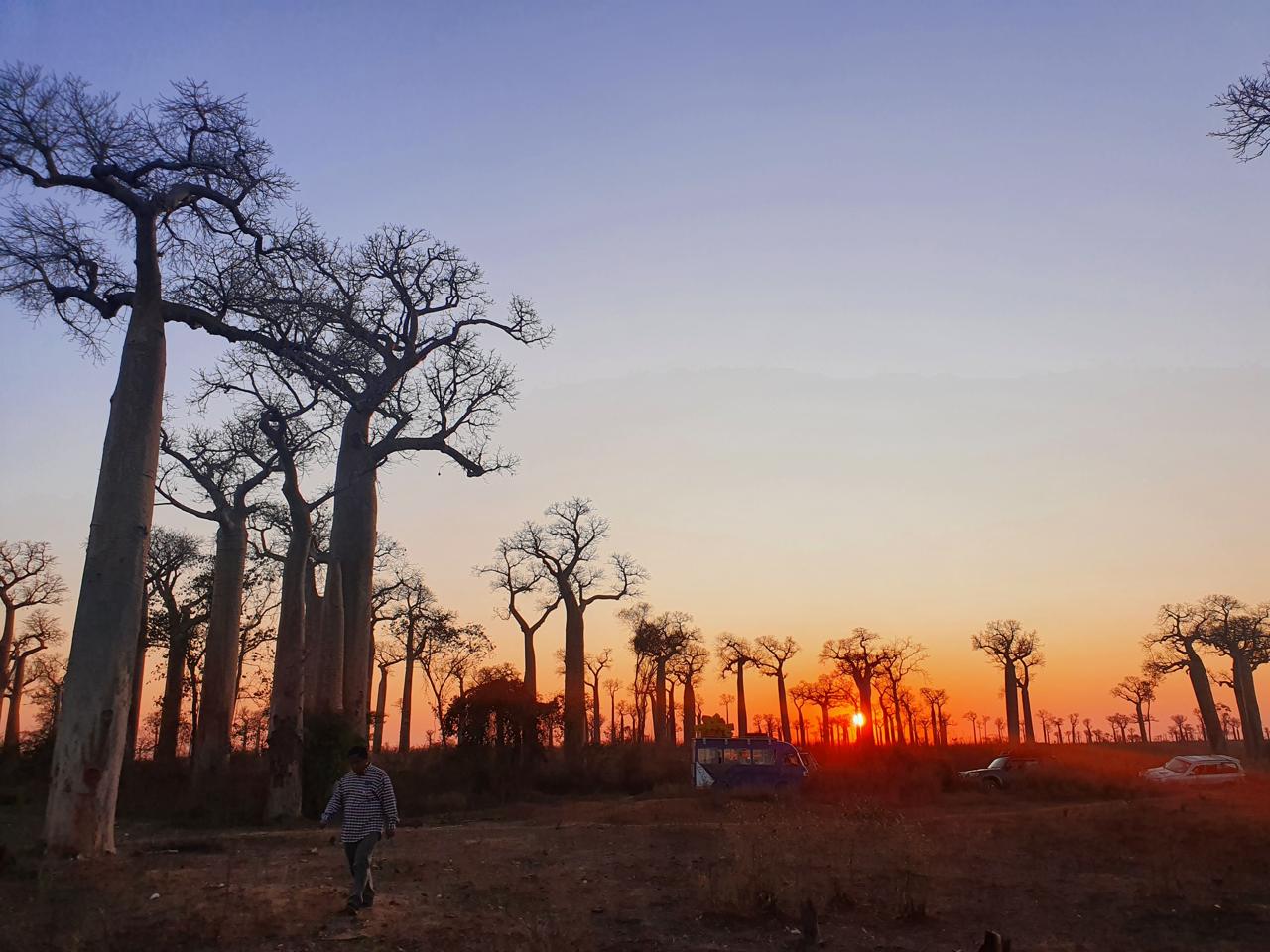
It is inconceivable to end this excursion without admiring the baobabs up close, these particular trees that make the name of the Morondava region famous. Coming from Belo aboard the Tsiribihina, which will serve as our passage point, we will greet the Sacred Baobab (make your wishes!), the Loving Baobab, increasingly reproduced on markets by wicker artisans, and the Alley of Baobabs, a place of admiration for many visitors from all over the world. Arrival in Morondava will be in late afternoon, with a rest at the Bougainvilliers hotel offering an unmissable view of the Mozambique Canal. Note: The descent of Tsiribihina can also be done by barge, at your choice. These boats, formerly used exclusively by tobacco plantations, are now ten in number and comfortably equipped to welcome tourists. Notably observed is a solarium installed on the roof, whose height offers an ideal viewpoint to admire the landscape throughout the descent.
Departure
Continuation by plane to Antananarivo or Toliary. End of our services.
Expedition Booking
Contact Rija to customize this itinerary to your pace and budget.
Snapshots